
Prudent Approach to Materiality Assessment
As sustainability considerations continue to influence business performance, stakeholder expectations, regulatory developments and long-term value creation, Kirloskar Brothers Limited (KBL) undertook its first third party independent Double Materiality Assessment (DMA) to identify, assess and prioritise the sustainability topics most relevant to its business and stakeholders. The Double Materiality Assessment (DMA) is based on the European Sustainability Reporting Standards (ESRS) and Corporate Sustainability Reporting Directive (CSRD) requirements. Guided by the content and requirements of the ESRS, Company adopted a systematic approach to the double materiality assessment to identify and evaluate all material Impacts, Risks and Opportunities (IRO). It used the scoring and assessment model suggested by the ESRS.
The assessment was conducted to strengthen KBL’s understanding of sustainability-related Impacts, Risks and Opportunities (IROs) arising across its operations, products, services and value chain. It provides a structured framework to evaluate how KBL’s activities impact the environment and society, while also assessing how sustainability-related matters may influence the Company’s business performance, operational resilience, strategic objectives and long-term value creation.
The DMA enables KBL to better understand the sustainability topics that are most significant from both Impact Materiality and Financial Materiality perspectives. The assessment outcomes support informed decision-making, risk management, stakeholder engagement, sustainability strategy development and future sustainability disclosures.
The assessment considered sustainability-related matters across Environmental, Social and Governance (ESG) dimensions and incorporated inputs from stakeholder consultations, management discussions, operational reviews, industry-specific sustainability considerations and internationally recognised sustainability frameworks. This helped ensure that the identified material topics appropriately reflect KBL’s business context, operational footprint, stakeholder expectations and long-term strategic priorities.
KBL recognises that sustainability-related impacts, risks and opportunities are interconnected and may influence business performance over short, medium and long-term horizons. Accordingly, the DMA provides a foundation for integrating sustainability considerations into governance processes, business planning, risk management practices, operational decision-making and long-term value creation initiatives.
The assessment followed a structured and systematic approach aligned with globally recognised materiality assessment principles and guidance. The outcomes of DMA provide the basis for KBL’s material sustainability topics and support the Company’s commitment to responsible business practices, innovation-driven growth, operational excellence and sustainable value creation for all stakeholders.
The DMA was prepared on the basis of an exclusive questionnaire developed to seek the ESG perceptions of all applicable stakeholders including economic, social and environmental stakeholders who directly or indirectly interact and impact KBL business. The Sustainability core team conducted several awareness sessions along with internal and external domain experts to discuss the impacts, risks and opportunities. The DMA is validated by the Top Management.
Impacts, Risks and Opportunities Across the Value Chain
The material Impacts, Risks and Opportunities (IROs) identified through KBL’s Double Materiality Assessment (DMA) are linked to the Company’s business activities and value chain based on CSRD requirements. The assessment considered sustainability-related impacts, dependencies, risks and opportunities arising across upstream activities, KBL’s own operations and downstream activities associated with product use, service delivery and end-user applications.
The value chain assessment enabled KBL to understand where material sustainability matters originate, how they may influence stakeholders and business performance and where management actions can create positive environmental, social and economic outcomes. The assessment also supported the identification of material Environmental, Social and Governance (ESG) topics relevant to KBL’s operations, products, services and stakeholder ecosystem.
Material IROs may arise across different stages of the value chain, including responsible sourcing of raw materials and components, supplier and contractor management, manufacturing operations, energy and resource consumption, employee health and safety, product innovation, customer applications and end-of-life management considerations.
The outcomes of the assessment are integrated into KBL’s sustainability management approach, governance processes, risk management framework and strategic decision-making activities. Relevant functions across the organisation are responsible for managing and monitoring identified material IROs and supporting continuous improvement in sustainability performance.
The identified IROs will continue to be monitored and managed through KBL’s sustainability governance mechanisms, risk management processes and strategic decision-making frameworks. These outcomes provide an important foundation for strengthening sustainability performance, enhancing resilience and supporting sustainable value creation across the value chain.
Assessment Results and Material Topic Prioritisation
The Double Materiality Assessment enabled KBL to evaluate and prioritise sustainability-related topics based on both Impact Materiality and Financial Materiality perspectives. The assessment considered the significance of actual and potential impacts on the environment, society and stakeholders, as well as the potential influence of sustainability-related risks and opportunities on KBL’s business performance, operational resilience, stakeholder relationships and long-term value creation.
The assessment incorporated stakeholder inputs, business considerations, sector-specific sustainability challenges, regulatory developments and value chain impacts to determine the relative significance of each sustainability topic. The identified topics were subsequently assessed, scored and prioritised using a structured materiality assessment methodology.
The results of the assessment provide a comprehensive understanding of the sustainability matters that are most relevant to KBL and its stakeholders. The prioritisation process supports the integration of sustainability considerations into business strategy, governance, risk management, operational decision-making and future sustainability disclosures.
The materiality assessment outcomes are presented through the Materiality Matrix and material topic prioritisation framework shown on page 22. Based on the combined materiality assessment scores, the identified sustainability topics were categorised into High, Medium and Low materiality levels.
The materiality categories represent the relative significance of each topic and support KBL in focusing resources, management attention and sustainability initiatives on the matters that have the greatest potential to influence stakeholders, business performance and long-term value creation.
The following figure presents the Materiality Matrix and the prioritisation of material sustainability topics identified through the Double Materiality Assessment.
Double Materiality Assessment Matrix
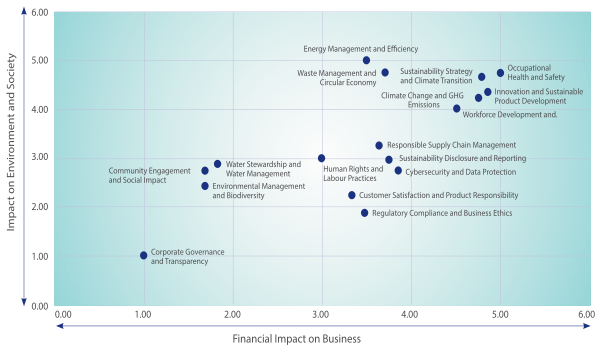
Categorisation of Material Topics
To understand KBL’s management approach and strategies on Double Materiality Assessment in detail, please refer to the Business Responsibility and Sustainability Report (BRSR) on Page 135.
Continuous Monitoring and Improvement
KBL recognises that sustainability-related impacts, risks and opportunities may evolve over time due to changes in the regulatory environment, stakeholder expectations, market conditions operational activities, technological advancements and climate-related developments.
Accordingly, KBL intends to periodically review and update the Double Materiality Assessment process and identified material topics to ensure continued relevance, effectiveness and alignment with evolving business and sustainability priorities once in every five years or any material topic perceived to become severe whichever is earlier.
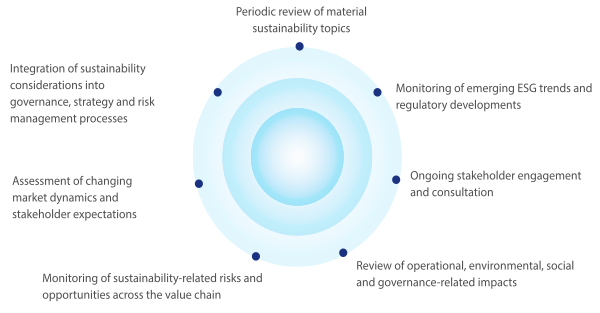
KBL also intends to strengthen its sustainability governance and decision-making processes through:
This continuous improvement approach will support KBL in strengthening long-term business resilience, sustainability performance, stakeholder confidence and responsible business practices.